Bringing Back Florida’s River of Grass
The Everglades is one of Florida’s greatest natural treasures—a slow-moving “river of grass” that once flowed freely from Lake Okeechobee all the way to Florida Bay. Over time, canals, levees, and development changed how water moved through this vast wetland, leading to major problems for wildlife, water quality, and coastal ecosystems like the St. Lucie Estuary and Indian River Lagoon.
At Florida Oceanographic Society, we’re working to restore balance to this vital ecosystem through research, education, and advocacy—and by supporting projects that move clean water south, where it belongs.
Why the Everglades Needs Restoration
The Everglades once stretched across much of South Florida, filtering water, recharging aquifers, and providing a home for countless plants and animals. But decades of drainage for farming, flood control, and urban growth changed everything.
Those changes disrupted the timing, flow, and quality of freshwater, leading to:
-
Loss of wetlands and wildlife habitat
-
Polluted runoff carrying excess nutrients
-
Harmful algal blooms in nearby estuaries
-
Saltwater intrusion in coastal aquifers
-
Damage to sensitive ecosystems like the St. Lucie Estuary
Over time, it became clear that restoration was essential—not just for nature, but for Florida’s people, economy, and way of life.
CERP: The Comprehensive Everglades Restoration Plan
In 2000, Congress approved the Comprehensive Everglades Restoration Plan (CERP)—the largest environmental restoration project in U.S. history. CERP focuses on improving water quantity, quality, timing, and distribution across the Everglades system.
CERP is guided by an Integrated Delivery Schedule (IDS)—a roadmap that sets the timeline, priorities, and funding for each restoration project. Together, these efforts aim to bring life back to Florida’s wetlands and estuaries.
Learn more about how Everglades Restoration connects to Lake Okeechobee management on our Lake Okeechobee page.
Stopping Harmful Discharges to the St. Lucie Estuary
When Lake Okeechobee’s water levels are high, massive discharges are sent east through the C-44 Canal into the St. Lucie Estuary. These releases carry fresh, nutrient-rich water, which can trigger toxic algae blooms and disrupt salinity—putting oysters, seagrass, and entire estuarine ecosystems at risk.
To fix this, water must once again flow south into the Everglades rather than east and west into our coastal waterways.
Learn more about our local efforts to protect the St. Lucie Estuary and Indian River Lagoon here.
Key Restoration Projects Making a Difference
Several major projects are underway to help clean and redirect water, reduce pollution, and restore balance to Florida’s waterways:
-
C-44 Reservoir and Stormwater Treatment Area (STA) – Captures and treats local runoff before it reaches the St. Lucie Estuary, improving water quality and salinity balance.
-
C-23/C-24 Reservoirs and STAs – Part of the Indian River Lagoon-South (IRL-S) Project, designed to store and filter runoff before it enters the estuary.
-
C-25 Reservoir and STA – A newly approved project to capture and treat water in northern Martin and southern St. Lucie Counties.
-
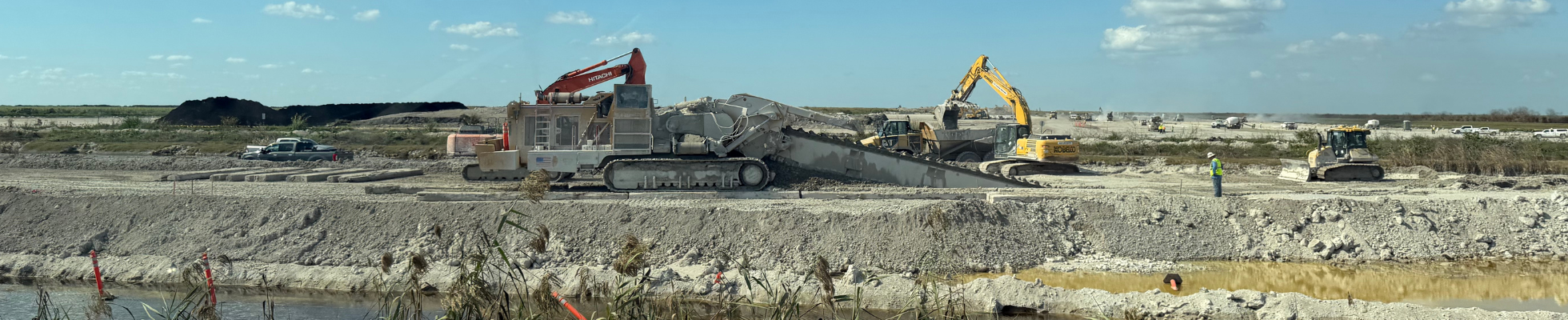
EAA Reservoir (Everglades Agricultural Area Reservoir) – The centerpiece of CERP, this massive storage and treatment system south of Lake Okeechobee will hold more than 78 billion gallons of water. When completed (expected by 2029), it will send clean freshwater south to the Everglades and drastically reduce harmful discharges into the St. Lucie Estuary.
Each of these projects helps restore natural flow patterns, reduce nutrient pollution, and rebuild healthier estuarine habitats.
Our Advocacy Priorities for the Everglades
Florida Oceanographic Society is committed to advancing policies and projects that protect and restore our waters. We’re advocating to:
-
Accelerate completion of the EAA Reservoir and C-44, C-23/24, and C-25 projects.
-
Prioritize water flow south to the Everglades rather than east and west to coastal estuaries.
-
Restore local habitats, including wetlands, oyster reefs, and seagrass beds in the Indian River Lagoon-South region.
-
Ensure transparency and accountability in restoration funding and project management.
-
Engage the community in monitoring progress and advocating for water quality improvements.
Protecting the Future of Florida’s Waters
The Everglades Restoration effort is more than an environmental project—it’s about protecting Florida’s heritage, economy, and quality of life. By restoring the natural flow of water southward, we can improve conditions for both wildlife and people.
At Florida Oceanographic Society, we’re proud to play a role in this critical effort—and we invite you to join us.
Learn more about our work in Water Quality and Advocacy for Florida’s Environment.
Together, we can ensure that Florida’s River of Grass continues to flow, supporting life from the Kissimmee River to the Florida Keys for generations to come.