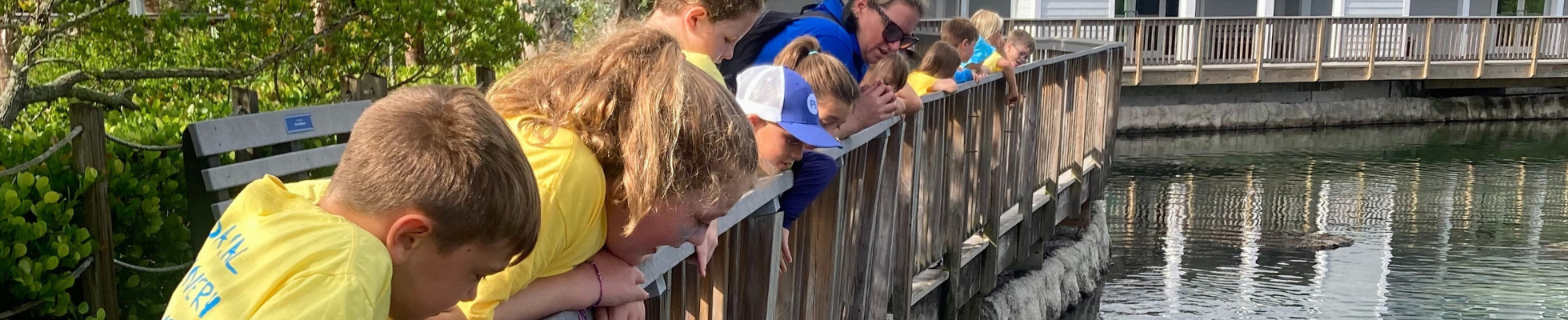
This February, Florida Oceanographic Coastal Center is celebrating the lifeblood of tropical and subtropical estuarine communities – mangroves. The nutrients derived from the breakdown of mangrove leaf materials provide an important base for the food web. Mangroves also provide the shelter for the nursery habitat critical for numerous commercial, game, and rough fisheries, and birds and invertebrates that make them their home.
Worldwide, there are more than 50 species of mangroves worldwide, not necessarily linked by their taxonomy (genetics) but by their ability to deal with the harsh environment of salt water. There are multiple ways that mangrove trees cope: from preventing the harsh, salty solution from absorption by their internal structures in the first place, to excreting it from special locations on their leaves.
Mangal, a term not used locally but used worldwide, refers to the community or assemblage of woody plants that function as mangroves. For instance, there are three recognized species that make up the mangal habitat at Florida Oceanographic and on the east coast of Florida: the red mangrove, the white mangrove, and the black mangrove.
Mangals, in the ideal situation, extend for miles along our estuarine shorelines, therefore they provide a magnificent opportunity for protected corridor for many mammals that we are also featuring this month including bobcats, gray fox, opossums, raccoons, marsh rabbits, and river otters. On a lucky day, any of these species can be spotted on the nature trail through Florida Oceanographic's mangrove swamp, or mangal.
Visit our coastal center this month to learn about mangroves and view our informational fact sheets below.